

Winter tires for commercial vans deserve strong consideration when vehicles must operate through cold, snow and ice without the flexibility to delay a route. Commercial all-weather tires may suit some operating conditions, but the decision must also account for vehicle specifications, loaded weight and the consequences of losing traction.
For a service business, the choice affects more than the tire invoice. A van that cannot reach its first appointment can take a technician, tools and several booked jobs out of the day’s schedule. November is a useful time to make that decision across the fleet, before changeovers become an urgent response to the weather.
Understanding All-Season, All-Weather and Winter Tires
All-season, all-weather and winter tires are different categories, and the names should not be treated as interchangeable. Start by checking the actual tire’s markings, intended application and manufacturer specifications.
Conventional all-season tires are designed for a broad range of conditions, but that does not automatically make them suitable for demanding winter routes. All-weather tires typically combine year-round use with a mountain-snowflake rating. Dedicated winter tires are designed specifically around cold-weather performance.
Transport Canada explains that all-season and summer tires begin losing elasticity below 7°C, while winter tires remain flexible at lower temperatures. That makes temperature relevant even before the road is covered in snow.
Avoid choosing from a product name alone. Confirm that the specific size and version being quoted are suitable for the van and its work.
Choosing Winter Tires for Commercial Vans Starts With Fitment
The right tire category still needs the correct size, load capacity and application for the vehicle. A passenger-car recommendation should never be transferred automatically to a loaded cargo van. A Ford Transit, Ram ProMaster or Mercedes-Benz Sprinter can have different tire requirements depending on its configuration. Bring the vehicle identification number and a photograph of the tire placard when requesting a quote.
Ask the shop to confirm tire size, load index, required construction, wheel compatibility and inflation requirements. Commercial markings such as LT or C-metric require proper interpretation rather than substitution based on similar-looking dimensions.
Shelving, partitions, tools and materials also contribute to the load. Our guide to work van payload capacity explains why installed equipment must be included when reviewing vehicle weight. Higher-capacity tires do not increase the van’s permitted gross vehicle weight or axle ratings. Those limits remain part of the vehicle specification.
Reading the Mountain-Snowflake Symbol Correctly
The Three-Peak Mountain Snowflake, commonly shortened to 3PMSF, identifies a tire that meets specified snow-traction requirements. It is useful evidence, but it does not mean every tire displaying it performs identically in every winter condition.
Commercial all-weather products can carry this symbol alongside dedicated winter products. Michelin’s Agilis CrossClimate range is one example of commercial tires offering year-round use with a snow-traction rating.
The practical question is how the particular tire performs for the conditions your drivers face. Review the manufacturer’s application guidance and available testing for the exact product, rather than assuming a snow rating settles every comparison. Ask the supplier to distinguish snow performance from ice performance. A single symbol is not a complete rating of braking, cornering, wear and traction on every surface.
Matching the Tire Choice to Your Routes
Route conditions and scheduling flexibility should guide the comparison. A fleet that can postpone non-urgent visits has different operating demands from one that must respond before roads are fully cleared.
Consider two planning examples. A maintenance van working short daytime appointments may have flexibility to rearrange calls during a storm. An emergency service van leaving North York before dawn may need to reach customers regardless of the forecast. Neither example replaces a vehicle assessment. It shows why fleet managers should document the work before asking for a recommendation.
| Operating Factor | What to Discuss With the Tire Provider |
|---|---|
| Early starts or overnight work | Exposure to untreated or refreezing surfaces |
| Fixed appointments or urgent calls | Limited ability to delay travel |
| Hilly access roads and customer driveways | Traction demands beyond major cleared roads |
| Tools, stock and installed shelving | Correct fitment and loaded operating requirements |
| Several interchangeable vans | Consistent handling and driver familiarization |
| Seasonal changeovers | Available booking windows and storage arrangements |
Dedicated winter tires deserve closer consideration when winter conditions and inflexible schedules are central to the job. An all-weather option should be assessed against those same demands, not selected solely to avoid a second set.
Comparing Total Costs Across the Fleet
Compare the cost of operating each option over time, including service arrangements and disruption. The lowest purchase price does not answer the whole business question. A useful quote should identify the tires, installation, balancing, applicable sensors, wheels if required, and storage arrangements. Confirm which items are included and which are additional.
Two seasonal sets share the annual driving distance, but that does not guarantee a specific saving or service life. Wear depends on the product, alignment, inflation, load and operating conditions. For fleets with several vehicles, scheduling can be as consequential as storage. Booking every van for the same morning may leave the business short of working units.
Fleet management support can help coordinate service requirements and keep maintenance records connected to each vehicle. Use those records to compare actual wear and downtime when the next purchasing decision arrives.
Keeping Tire Condition Part of the Decision
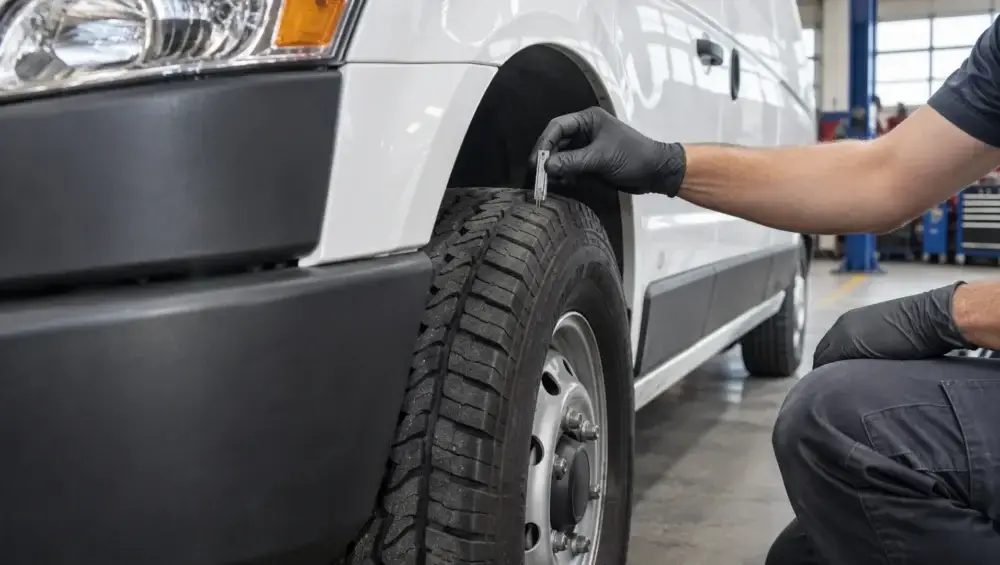
A suitable tire needs adequate tread, correct inflation and sound physical condition to perform as intended. Its category does not cancel out wear, damage or an unresolved alignment problem. Ask for tread measurements rather than a general description such as “still looks fine.” Transport Canada advises against using tires worn close to 4 mm of tread on snow-covered roads.
Have uneven wear investigated before fitting replacements. Otherwise, the new set may be exposed to the same underlying problem. Pressure should follow vehicle and tire guidance for the application. Do not use the sidewall’s maximum pressure as an automatic everyday target.
Our commercial vehicle maintenance and repair services include tires, storage, TPMS and alignment. Those related checks belong in the discussion when a van’s tire condition or handling has changed.
Planning the Changeover Before the First Disruption
Prepare a vehicle-by-vehicle list before arranging winter tire service. Record the unit number, specifications, existing tire condition, normal route and times when the vehicle can be released. Start with vans whose work is hardest to reassign. Group appointments around operational capacity, while addressing unsafe tires promptly.
Tire selection is one part of seasonal readiness. Use our work truck and van winter-preparation guide to plan the remaining checks without turning the tire appointment into an incomplete winter inspection.
Fleet Specialties serves commercial vehicles from its North York facility. When arranging a tire assessment, explain what each van carries, where it works and how much flexibility the business has when conditions deteriorate.
Frequently Asked Questions
Can we use the same tire model across different vans?
One tire model may be available in suitable specifications for several vans, but compatibility must be checked for each vehicle. Standardize only after confirming the required sizes, load ratings and applications.
Should spare tires be included in the assessment?
The spare tire should be checked for condition, inflation and compatibility with the vehicle. Drivers should also know any manufacturer restrictions on its speed, load or permitted driving distance.
Can we compare fleet tire options without knowing our annual kilometres?
You can begin the fitment and route assessment without an exact annual figure. Providing odometer records or a reasonable usage estimate will make cost and wear comparisons more useful.
What should be recorded when seasonal tires go into storage?
Record the vehicle or unit number, tire identification, tread measurements and any damage or uneven wear. Clear records help prevent unsuitable tires being refitted at the next changeover.