
Winter fleet maintenance should begin before freezing temperatures, snow and road salt put additional strain on commercial vehicles. For Toronto businesses, preparing work trucks and vans means checking batteries, tires, brakes, fluids, heating systems and other components that can affect reliability during the colder months.
A planned inspection in the fall helps identify problems before they interrupt deliveries, service appointments or construction schedules. For fleets operating across North York and the Greater Toronto Area, the goal is to keep vehicles safe, reliable and ready for work.
Why Winter Fleet Maintenance Matters for Toronto Businesses
Commercial vehicles face demanding winter operating conditions. A delivery van making repeated stops may spend hours starting, idling and navigating traffic. A contractor’s truck may carry heavy tools and equipment between job sites. Service vehicles may sit outdoors overnight before starting early the next morning.
Cold weather can expose weaknesses in batteries, charging systems, tires, heating equipment and other components. Toronto vehicles may encounter wet pavement, slush, packed snow and salted roads on the same working day.
When a commercial vehicle cannot complete its route, a business may face delayed appointments, missed deliveries, idle employees and rescheduling costs. Seasonal preparation should therefore be part of a broader preventive fleet maintenance strategy rather than something addressed only after a breakdown.
Battery and Charging System Checks Before Temperatures Drop
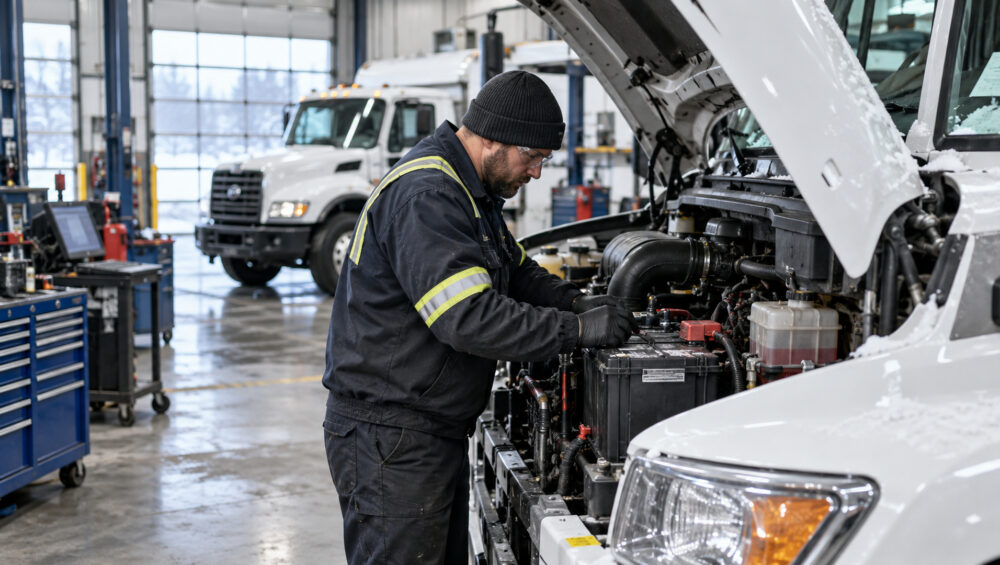
A battery that starts a vehicle reliably in September may struggle during a cold January morning. Lower temperatures reduce a battery’s available starting power, while cold engines generally require more energy to start.
Repeated short trips, frequent starts and extended use of electrical accessories can add stress to commercial vehicle charging systems.
What Should Be Inspected?
A winter inspection may include:
- Battery condition and available starting capacity.
- Alternator output and charging system performance.
- Battery terminals, cables and connections.
- Starter operation and signs of slow cranking.
- Parasitic electrical draws where unexpected discharge is suspected.
A simple voltage reading does not always reveal how well a battery can supply starting power under load. Load or conductance testing may be needed. Vans fitted with extra lighting, communication devices or tracking equipment can have additional electrical demands.
Drivers should report slow cranking, repeated starting attempts and charging-system warning lights. Investigating these problems in October is generally less disruptive than discovering them when a loaded van needs to leave the yard on a freezing morning.
Inspecting Tires, Brakes and Suspension for Winter Conditions
Tires and braking systems are central to safe winter driving, especially when commercial vehicles carry substantial loads.
Tire Condition and Pressure
Fleet operators should examine:
- Tread depth, uneven wear and overall tire condition.
- Pressure according to the manufacturer’s specifications and load.
- Sidewall damage, punctures and tire age.
- Tire suitability for the vehicle’s winter routes and duties.
Cold temperatures affect tire pressure, so regular checks are essential. Winter tires can improve traction in cold, snowy and icy conditions, but tires must also meet commercial vehicle load and application requirements. A passenger-car recommendation should not automatically be applied to a heavier truck.
Brakes and Suspension
Inspect brake pads or shoes, rotors or drums, calipers and hydraulic components. Where applicable, check air-brake equipment. Uneven braking, unusual noises, vibration or warning lights warrant investigation.
Worn suspension and steering components can affect stability and tire wear. For some Ontario commercial vehicles, daily inspections and other maintenance obligations apply. A seasonal inspection supplements those requirements rather than replacing them.
Fleet Specialties offers commercial vehicle maintenance and repair for brakes, tires, suspension, steering, diagnostics and electrical systems.
Heating, Defrosting, Coolant and Visibility Checks
A working heating and defrosting system helps drivers maintain visibility when windshields fog or freeze.
Heating and Defrosting
Confirm the heater produces sufficient heat, the windshield defroster and side-window airflow work, blower speeds operate correctly and cabin air filters are not overly restricted.
Weak heat may be linked to coolant levels, thermostat problems, heater-core restrictions or climate-control faults. Accurate diagnosis matters because the symptom alone does not establish the cause.
Cooling System Protection
Coolant remains essential in winter. An incorrect concentration, existing leak or low coolant level may cause severe problems in freezing weather. A technician can assess freeze protection, hoses, clamps, fluid condition and leaks. The appropriate coolant must match vehicle-manufacturer specifications.
Wipers, Washer Fluid and Lighting
Road salt and slush can quickly obscure windshields on Highway 401, Highway 400 and other busy GTA roads. Inspect wiper blades, washer pumps and nozzles, exterior lights and windshield condition. Use winter-rated washer fluid appropriate for anticipated temperatures.
Drivers should remove snow and ice from vehicles, including accumulation that could fall or obstruct lights and visibility.
Winter Preparation for Diesel Trucks and Heavily Used Work Vans
Diesel-powered vehicles can need extra attention when temperatures fall. At low temperatures, wax crystals may form in diesel fuel and restrict fuel flow through filters. Fleet managers should confirm that their fuel is suitable for the season and follow manufacturer recommendations for any additive.
Diesel Starting Systems
Depending on the engine, cold starts may rely on glow plugs, intake heaters or other starting aids. Hard starting, rough operation following startup or system warnings should be diagnosed before winter.
High-Use Service Vans
Repeated short journeys and long periods of idling can place demands on vehicles that mileage alone does not capture. Review engine operating hours, accessory loads, service history and manufacturer recommendations when deciding maintenance intervals.
How to Schedule Winter Fleet Maintenance Without Disrupting Operations
Taking every truck or van out of service on one day is rarely necessary. A coordinated approach can identify problems early without shutting down operations.
Start With an Inventory
Record each vehicle’s identification number, mileage, age, location, upcoming inspection date and recent maintenance history. Flag vehicles with recurring battery, brake, tire, cooling or starting complaints.
Prioritize Higher-Risk Vehicles
Give attention to vehicles that operate overnight or early in the morning, travel long distances, carry essential equipment or have few available replacements. Safety-related defects require timely attention rather than waiting for the next seasonal appointment.
Stagger Appointments
A contractor operating six vans might release one vehicle at a time while the others remain available. A planned rotation helps reduce disruption and makes it easier to schedule necessary repairs.
Fleet Specialties’ fleet management services include assistance with maintenance coordination, service history and scheduled inspections.
When to Book a Professional Winter Fleet Maintenance Inspection
October and early November offer a practical opportunity to assess vehicles before sustained freezing temperatures arrive. Timing should also reflect vehicle utilization, manufacturer service intervals and known problems.
An existing brake fault, warning light, weak battery or coolant leak should be addressed promptly rather than postponed for a winter inspection. A seasonal check also does not replace any required Ontario annual commercial vehicle safety inspection.
Keep Your Commercial Fleet Ready for Winter
The best time to discover a deteriorating battery, unsafe tire or defroster problem is before a vehicle is needed for a winter service call. An organized maintenance plan helps fleet operators set repair priorities and keep essential vehicles available.
Fleet Specialties provides commercial fleet maintenance, repairs and diagnostics from its North York facility for businesses in Toronto and the GTA. To discuss inspections and scheduling, contact Fleet Specialties.
Frequently Asked Questions
When should a commercial fleet schedule winter maintenance in Ontario?
Commercial fleets should begin planning winter inspections in early fall, before freezing temperatures and winter driving conditions become common. October or early November can provide useful time to arrange necessary repairs.
Do commercial fleet vehicles need winter tires in Toronto?
Ontario does not impose a universal winter-tire requirement on every commercial vehicle operating in Toronto. Operators should choose tires based on vehicle type, load ratings, routes and expected conditions.
Why do commercial vehicle batteries fail more often in cold weather?
Cold weather reduces available battery starting power while cold engines generally require more energy to start. A deteriorating battery can therefore fail in winter even when it seemed satisfactory in warmer weather.
Is a winter inspection the same as an Ontario annual safety inspection?
Cold weather reduces available battery starting power while cold engines generally require more energy to start. A deteriorating battery can therefore fail in winter even when it seemed satisfactory in warmer weather.
Can winter inspections be scheduled without taking every vehicle off the road?
Yes. A fleet manager can stagger appointments based on route schedules and vehicle priorities. This lets some vehicles remain available while others receive maintenance or repairs.