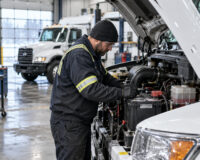


Winter fleet maintenance should begin before Toronto settles into sustained cold weather. A good pre-winter plan checks tires, batteries, brakes, fluids, heating and visibility systems, then schedules needed work before several vehicles develop problems at the same time.
For businesses that depend on work trucks or vans every day, winter preparation reduces avoidable breakdowns and makes downtime easier to plan.
Start Before Cold Weather Exposes Weak Components
Cold weather exposes marginal batteries, weak washer systems, low tire pressure and heating problems that may not interrupt service in mild weather. A marginal battery may start a van on a warm September morning but struggle once temperatures fall. Wiper blades that were merely annoying in rain can become a visibility problem in wet snow and road spray.
Review each unit’s service history, driver complaints and upcoming maintenance requirements before the first major storm. Vehicles with repeated battery issues, tire wear, brake concerns, coolant leaks or heating problems should move to the front of the schedule.
Fleet Specialties’ commercial vehicle maintenance and repair services include preventive maintenance, diagnostics, brakes, electrical repairs, tires, steering and suspension, heating and cooling, and other work commonly needed before winter.
Build Winter Fleet Maintenance Around Cold-Weather Failure Points
A useful winter fleet maintenance plan is more specific than a general oil-change schedule. It should focus on systems that affect starting, traction, stopping, visibility and reliability when temperatures fall.
Start with vehicle condition, not just mileage. A cargo van making frequent stops through Toronto traffic can accumulate brake and tire wear differently from a lightly used company pickup. A service truck carrying tools and equipment may also place greater demand on tires, suspension and electrical systems.
A pre-winter review should normally include:
- battery condition and charging-system performance
- tire type, tread condition, pressure and uneven wear
- brakes and driver-reported vibration, pulling or noise
- coolant, engine oil and other fluids due for service
- heater and defroster operation
- wiper blades and winter-rated washer fluid
- exterior lights and warning lights
- steering and suspension
- visible leaks, damaged hoses and worn belts
- door seals, latches and cargo-area hardware
The goal is to identify components that are already weak enough that cold weather could turn a manageable concern into a roadside problem.
Plan Tire Changes Before Temperatures Stay Below 7°C
Tire planning should happen before the first snowfall. Transport Canada states that all-season and summer tires begin losing elasticity below 7°C, while winter tires are designed to remain flexible and maintain grip at lower temperatures.
Waiting for the first snow forecast can mean trying to move several trucks or vans through tire service at once. Identify which vehicles will use winter tires, confirm tire condition and sizes, and stage changeovers based on route, usage and expected exposure.
Transport Canada recommends installing winter tires in sets of four and using compatible tire specifications on all four wheels. Ontario also advises drivers to check tire pressure regularly because cold weather can reduce pressure.
Test Batteries and Charging Systems Before the First Hard Freeze
A battery doesn’t have to be completely dead to disrupt a workday. Slow cranking, intermittent starting and electrical warnings can make a vehicle unreliable for scheduled jobs.
Pay attention to vehicles that have shown slow starts, repeated jump-starts, charging-system warnings or inconsistent electrical performance. A battery test can identify a weak battery before failure, while a charging-system check can uncover alternator or connection problems that a new battery alone will not fix. This is especially relevant for work vehicles carrying auxiliary lighting, inverters, charging equipment, telematics or other upfit components that add electrical demand.
Check Heating, Defrosting and Visibility Systems
A work vehicle can run properly and still be unsuitable for a winter route if the driver cannot keep the windshield clear. Test the heater and defroster before cold weather becomes routine. Check rear defrost systems where equipped, confirm the blower operates correctly, and investigate weak airflow or heating performance.
Make sure you’re using winter washer fluid rated to -40°C. Wiper blades should clear the windshield cleanly, and exterior lights should be checked because winter driving often means darkness, spray, snow and reduced visibility. Commercial drivers should also make snow and ice removal part of the daily routine. Clear ice and snow from the vehicle, including the top of trailers, and to check lights along the route for buildup.
Inspect Brakes, Steering and Suspension Before Slippery Conditions
Worn brakes, steering play and alignment problems become more consequential when traction is reduced by snow, slush or ice. Review driver reports of brake noise, vibration, pulling, steering looseness or unusual handling before winter. Uneven tire wear can also point to alignment or suspension issues that deserve inspection.
The Fleet Specialties guide to preventive fleet maintenance explains why maintenance should reflect actual vehicle use, including loads, stop-and-go driving, repair history and driver feedback. For vehicles subject to Ontario commercial inspection requirements, winter preparation should also fit into the compliance schedule. Coordinating maintenance with Ontario commercial vehicle safety inspections can help reduce duplicate downtime.
Protect Vehicles From Salt, Brine and Winter Grime
Toronto uses road salt and liquid salt brine as part of its winter road-maintenance program. The City applies brine in advance of snow or ice on locations such as expressways, hills and bridges, while salt is used as snow begins to accumulate.
Commercial vehicles can therefore spend months driving through salty spray. Pay attention to areas where corrosion can create future problems, including brake components, fasteners, exposed metal, electrical connections and the underbody. Regular washing, especially underneath the vehicle, can help remove salt residue. This matters even more for high-mileage vehicles operating daily through winter.
Give Drivers a Short Daily Winter Check
The shop can prepare the vehicle, but the driver is the person who sees it every day.
A winter driver check should be brief enough that it actually gets done. Ask drivers to report changes in starting, tire appearance, steering, braking, heater performance, warning lights and fluid leaks. They should also confirm that windows, mirrors, lights and the roof or cargo body are clear of snow and ice before departure.
Keep basic winter equipment appropriate to the vehicle and route. Ontario recommends items such as a scraper, winter washer fluid, flashlight, blanket, jumper cables, shovel and traction material.
Stagger Winter Preparation Across the Fleet
The fastest way to make winter maintenance disruptive is to discover that every vehicle needs attention at the same time. Start with units that have the highest daily use, least route flexibility, known maintenance concerns or upcoming service requirements. Then work through the remaining vehicles in planned groups.
Fleet Specialties’ fleet management services support repair-history tracking, inspection coordination and maintenance planning for business fleets. That history can help identify which vehicles deserve attention first instead of treating every unit as if it has the same risk.
Get the Fleet Ready Before Winter Controls the Schedule
A fleet cannot control the first cold snap or snowfall, but it can control when tires, batteries, brakes and heating systems are inspected. Tires can be assessed before temperatures drop, batteries can be tested before the first hard freeze, and heating, brakes, fluids and visibility systems can be checked before drivers depend on them in poor conditions.
Fleet Specialties works with commercial fleets from its North York facility, servicing work trucks, vans and other company vehicles across Toronto and the GTA. Scheduling winter preparation before demand peaks gives the business more control over service timing and helps keep work vehicles available when they are needed.
Frequently Asked Questions
When should a Toronto fleet install winter tires?
A practical time to install winter tires is before temperatures are regularly below 7°C, rather than waiting for the first snowfall. Fleet operators should also consider route conditions, vehicle usage and service scheduling so multiple units are not all booked at once.
Are winter tires mandatory for commercial vehicles in Ontario?
Fleet operators should confirm requirements that apply to their vehicle class, route, insurer or operating contracts and choose tires appropriate to the conditions in which the vehicle will operate.
What should a driver check before the first route on a winter morning?
The driver should confirm that snow and ice have been cleared, visibility is unobstructed, lights and wipers work, tires appear properly inflated and no warning lights or obvious leaks are present. Any change in starting, braking, steering or heater performance should be reported.
Can road salt and brine damage work trucks and vans?
Repeated exposure to road salt and brine can contribute to corrosion on exposed metal, underbody parts, fasteners and some electrical components. Regular cleaning and inspection help identify and manage corrosion before it affects serviceability.
How can a business winterize several fleet vehicles without creating too much downtime?
Stagger the work by vehicle risk and operational priority instead of booking the entire fleet at once. Start with high-use units, vehicles with known concerns and those already due for maintenance, then schedule the remaining vehicles in planned groups.