
Commercial vehicle overheating can bring a workday to an immediate stop. A truck or van that begins running hot in traffic may need to be removed from service, leaving a driver stranded and a scheduled job unfinished.
The risk becomes more noticeable during a Toronto summer. Work vehicles often spend hours in stop-and-go traffic, carry tools or materials, idle at job sites and run their air conditioning throughout the day. These conditions place additional demand on the engine and cooling system.
Overheating is rarely something a fleet operator should ignore. Identifying the cause early can help prevent engine damage, unplanned downtime and a much more expensive repair.
Why Work Trucks and Vans Are Vulnerable to Summer Heat
Commercial vehicles often operate under more demanding conditions than personal vehicles. They may travel longer distances, make frequent stops, carry heavier loads and remain in operation for most of the day.
A service van moving between appointments in North York, Scarborough and downtown Toronto may spend significant time idling on Highway 401, the Don Valley Parkway or congested local roads. At low speeds, less natural airflow passes through the radiator. The cooling fan must work properly to help control engine temperature.
Vehicle load also matters. Tools, shelving, replacement parts, building materials and job-specific equipment add weight. The engine may have to work harder when accelerating, climbing grades or operating with a full cargo area.
These conditions do not automatically cause overheating. A cooling system in good condition should regulate engine temperature. Summer use often exposes a component that is already weak, leaking, restricted or close to failure.
Common Causes of Commercial Vehicle Overheating
Commercial vehicle overheating usually results from a cooling system that can no longer remove heat effectively. The underlying problem may be a low coolant level, restricted airflow, poor coolant circulation or a failing mechanical or electrical component.
Low Coolant or a Coolant Leak
Coolant absorbs heat from the engine and carries it to the radiator. When the level is too low, the system may not be able to regulate temperature properly.
Leaks can develop at radiator hoses, clamps, the coolant reservoir, radiator, water pump, heater core or other connections. Some leaks leave a visible puddle. Others appear only while the system is hot and pressurized.
Repeatedly adding coolant without finding the source is not a repair. Ongoing coolant loss should be investigated before the vehicle returns to regular service.
A Weak or Failed Cooling Fan
The cooling fan pulls air through the radiator when the vehicle is moving slowly or sitting still. A faulty fan motor, relay, sensor, wiring connection or fan clutch can allow the temperature to rise during idling.
This explains why some work vehicles run at a normal temperature on the highway but begin overheating in traffic or while parked at a job site.
A Restricted or Damaged Radiator
A radiator may lose efficiency because of internal deposits, corrosion, damaged fins or debris blocking external airflow. Even a partially restricted radiator may struggle when the engine is working hard in hot weather.
Commercial vehicles operating around construction sites, landscaping materials or dusty environments may need their radiator and condenser surfaces checked for accumulated debris.
Thermostat or Water Pump Problems
The thermostat controls when coolant begins circulating through the radiator. If it remains closed or does not open fully, engine temperature can rise quickly.
The water pump moves coolant through the engine and cooling system. A damaged impeller, worn bearing, leaking seal or loose drive belt can reduce circulation and lead to overheating.
Worn Belts and Hoses
A cracked hose can leak or collapse under pressure. A worn belt may slip or fail to drive a water pump properly, depending on the vehicle’s design.
Belts and hoses should be inspected as part of a preventive fleet maintenance program, rather than waiting for a roadside failure.
Why a Work Vehicle May Overheat Only While Idling
A vehicle that overheats while stopped but cools down once it begins moving may have an airflow problem. At road speed, air naturally passes through the grille and radiator. While the vehicle is stationary, the cooling fan has to provide that airflow.
A mechanic may inspect the electric fan, mechanical fan clutch, fan relay, temperature sensor, wiring and control system. The radiator and air-conditioning condenser should also be checked for dirt or damage that could restrict airflow.
The symptom should not be dismissed because the temperature drops after the vehicle begins moving. It is an early warning that the system may not be able to control engine temperature under all operating conditions.
Warning Signs Drivers Should Report Immediately
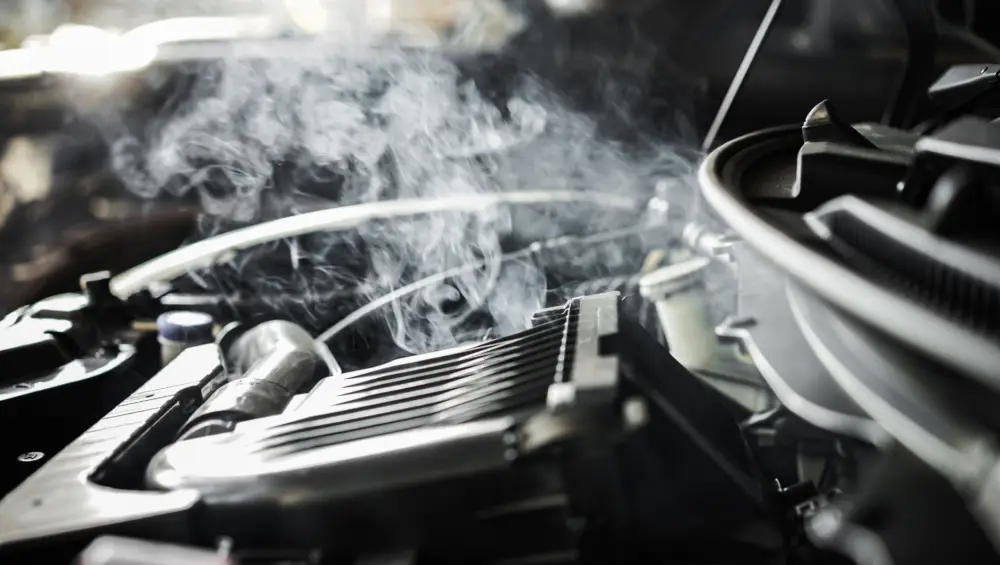
The temperature gauge is only one possible warning. Drivers should also report a temperature warning light, steam from under the hood, a sweet coolant smell, visible fluid, repeated coolant loss or unusual fan noise.
A heater that suddenly blows cold air while the engine temperature rises can also indicate a coolant circulation or level problem. Reduced air-conditioning performance while idling may point to an airflow or cooling fan concern, although several air-conditioning faults can cause similar symptoms.
Drivers should be encouraged to report small changes before the vehicle becomes undrivable. A brief note about when the symptom occurred can also help with diagnosis. Useful details include whether the vehicle was idling, carrying a heavy load, climbing a hill or running the air conditioning.
What to Do When a Commercial Vehicle Starts Overheating
A driver should find a safe place to pull over as soon as possible when a temperature warning appears or the gauge enters the hot range. Continuing to operate an overheating engine can turn a cooling system repair into serious engine damage.
The engine may need to be shut off and allowed to cool. A driver should never remove a radiator cap or open a pressurized cooling system while it is hot. Escaping coolant and steam can cause severe burns.
The fleet manager should be contacted so the vehicle can be inspected or transported safely. Adding fluid and continuing the trip may hide a leak temporarily without resolving the underlying problem.
What a Summer Cooling System Inspection Should Include
A proper cooling system inspection looks beyond the coolant reservoir. It should assess the entire system and the conditions under which the problem occurs.
A technician may check:
- Coolant level, concentration and condition
- Visible leaks and dried coolant residue
- Cooling system pressure
- Radiator condition and airflow
- Cooling fan operation
- Thermostat performance
- Water pump condition
- Belts, tensioners and hoses
- Warning lights and diagnostic trouble codes
- Heater and air-conditioning performance
Fleet Specialties provides commercial vehicle cooling system and air-conditioning repair along with engine diagnostics, electrical diagnostics, radiator service, water pump repairs and scheduled maintenance.
Testing is especially useful when a vehicle overheats intermittently. The problem may need to be recreated under conditions similar to those reported by the driver.
How Fleet Managers Can Reduce Heat-Related Downtime
The most effective approach is to inspect high-use vehicles before a heat-related problem interrupts operations. Priority should be given to vehicles with a history of coolant loss, rising temperature readings, weak air conditioning, long idle times or heavy daily loads.
Maintenance records can reveal patterns across the fleet. If several similar vehicles have comparable mileage or equipment, a failed hose, fan or water pump on one vehicle may justify checking the others.
A proactive fleet maintenance plan can also spread appointments across the calendar. This is easier to manage than having multiple vehicles unexpectedly removed from service during the same busy period.
Commercial vehicle reliability depends on more than passing an annual inspection. Still, keeping maintenance records current and addressing known defects also supports smoother Ontario yellow sticker inspections.
Keep Work Vehicles Ready for Summer Conditions
An overheating work truck affects more than the driver. It can delay crews, appointments, deliveries and customer commitments.
Fleet Specialties helps businesses maintain and repair commercial vehicles from its North York facility. If a truck or van is running hot, losing coolant or struggling during extended idling, schedule an inspection before the problem causes further damage.
Frequently Asked Questions
Can Running the Air Conditioning Make a Work Truck Overheat?
Air conditioning adds load to the engine and creates additional heat in front of the radiator. A properly functioning cooling system should manage that demand, so overheating with the air conditioning on often points to an existing fan, airflow, coolant or mechanical problem.
Why Does My Work Van Overheat Only When It Is Stopped?
A vehicle that overheats while stopped may not be receiving enough airflow through the radiator. A technician should check the cooling fan, fan controls, radiator and condenser before the vehicle returns to normal service.
Can I Keep Driving After the Temperature Warning Light Appears?
Continuing to drive can cause significant engine damage. The safest response is to pull over, shut the vehicle down when appropriate and arrange for the cause to be diagnosed.
How Often Should a Commercial Vehicle’s Cooling System Be Inspected?
The interval depends on the manufacturer’s recommendations, vehicle age, mileage, idle hours, operating conditions and repair history. High-use vehicles and those carrying heavy loads may require more frequent checks than personal vehicles.
Does Fleet Specialties Repair Commercial Vehicle Air Conditioning and Radiators?
Yes. Fleet Specialties services air conditioning, heaters, radiators, water pumps, electrical systems and other components found in commercial trucks and vans. The team can also investigate intermittent overheating and cooling system leaks.