
Fleet collision repair starts with more than arranging body work. After a work truck or van is involved in a collision, the fleet manager needs a clear process for driver safety, reporting, towing, damage documentation, repair planning and a safe return to service.
The first priority is people. Once the scene is secure, the business needs accurate information and a practical repair plan.
Make Safety and Reporting the First Steps
The driver should stop immediately, check for injuries and call 911 when emergency assistance is required. If there are no injuries and the vehicle can be moved safely, move it out of active traffic where possible.
Ontario law requires a collision to be reported to police when anyone is injured or when damage to vehicles or other property exceeds $5,000. Depending on where the collision occurred and the circumstances, police may direct the driver to a Collision Reporting Centre rather than sending an officer to the scene.
The fleet manager should make sure drivers know the company’s collision procedure before an accident happens. A printed or digital checklist can reduce missed information when the driver is stressed and trying to manage a busy roadside situation.
Document More Than the Visible Body Damage
Good documentation helps the fleet manager, insurer and repair facility understand what happened and what may need inspection.
When it is safe, the driver should take photos or video showing:
- all sides of the work vehicle
- the other vehicle or vehicles involved
- licence plates
- the wider collision scene
- road and weather conditions
- damaged wheels, lights, mirrors, glass and body panels
- visible fluid leaks or debris
- cargo-area damage
- damaged shelving, racks, partitions or other installed equipment
The driver should also record the other driver’s name, contact information, licence information, insurance details and vehicle information, along with witness contact information where available. For a commercial fleet, also record the unit number, driver, route or job assignment and any cargo or equipment affected.
Decide Whether the Vehicle Should Be Driven or Towed
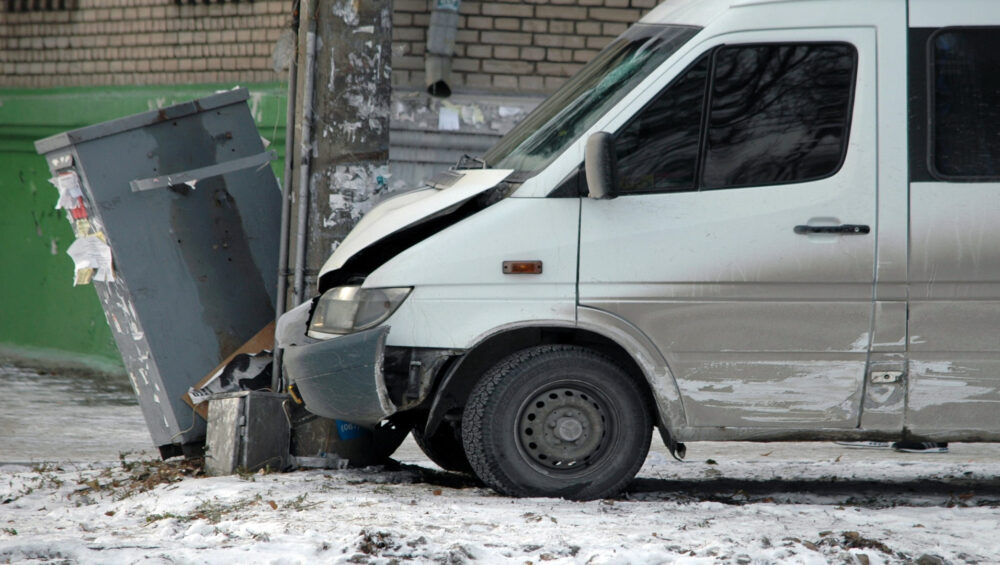
A vehicle that still moves is not automatically safe to drive. Collision damage can affect steering, suspension, wheels, tires, lights, cooling components, sensors and structural parts even when the vehicle looks relatively intact.
Don’t continue operating a work truck or van if there is a fluid leak, damaged tire or wheel, steering problem, severe vibration, deployed airbag, damaged lighting required for safe operation, loose bodywork or any sign the vehicle cannot be controlled normally. If the driver is uncertain, towing is the safer choice. Make sure to record the tow operator and company information and understand where the vehicle is being taken.
Fleet Specialties provides commercial fleet collision repair for light, medium and heavy-duty work vehicles, along with towing and accident-repair support.
Treat Fleet Collision Repair as a Mechanical Inspection Too
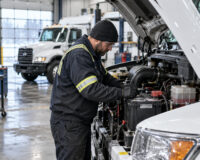
Post-collision assessment should extend beyond dents and paint. An impact can affect steering, suspension, wheels, sensors, structural mounting points and cargo equipment that determine how the vehicle drives, stops and carries a load.
Depending on the location and force of the impact, technicians may need to inspect:
- steering and suspension components
- wheel alignment
- tires and wheels
- brakes
- cooling-system components
- lighting and electrical connections
- doors, hinges and latches
- bumpers and mounting points
- frame or structural areas
- cameras, parking sensors or driver-assistance equipment
Some vehicles may require scanning, calibration or additional procedures after parts related to driver-assistance systems are disturbed or replaced. The correct process depends on the make, model, equipment and repair information for that vehicle. That’s why collision work should connect with commercial vehicle inspection and repair rather than treating the damage as a cosmetic problem alone.
Inspect Shelving, Ladder Racks and Other Upfit Equipment
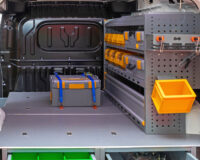
Commercial vans and trucks often carry equipment that a passenger vehicle does not have. Shelving, drawers, partitions, ladder racks, lighting, truck caps and other upfit components can shift, bend or loosen during a collision.
A damaged rack or partition may appear secondary to exterior body damage, but it still needs attention before the vehicle returns to work. Check mounting points, fasteners, welds, doors, drawer latches and any equipment that restrains tools or materials. The same applies to cargo that moved during the impact. Heavy tools, parts or equipment can damage the inside of the vehicle even when the exterior impact occurred elsewhere.
Fleet Specialties provides custom fleet upfitting for commercial vans and trucks. If installed equipment is damaged in a collision, including it in the repair assessment helps avoid returning a vehicle with a compromised work setup.
Give the Insurer and Repair Shop Complete Information Early
Contact the insurer promptly if the business intends to make a claim. Provide the collision report information, photos and known vehicle details, then ask what documentation or approvals are required.
At the same time, tell the repair facility how the vehicle is used. A cargo van assigned to daily deliveries creates a different operational problem than a spare unit. A service truck with specialized shelving or equipment may also require different repair planning than an unmodified pickup.
The fleet manager should ask for clarity on the repair scope, parts availability, insurer approvals and any work that depends on sublet services or calibration. A precise completion date may not be possible at the first inspection because hidden damage can become visible after disassembly. The key question is what must happen before the vehicle can safely and reliably return to its normal job.
Plan Around Downtime Instead of Letting It Spread
A disabled service van can remove a driver, tools and route capacity from the schedule at the same time, so downtime planning should begin as soon as the unit is confirmed out of service. Decide how its work will be covered. Options may include moving another fleet vehicle into the route, adjusting crew assignments, rescheduling lower-priority work or using a spare unit where available.
Keep the driver, operations team and repair contact working from the same status so approvals, parts and pickup timing stay clear. Fleet Specialties’ fleet management services include repair-history tracking and service coordination. Keeping the collision repair in the same unit history can also help the business understand future repair costs and make better replacement decisions.
Use a Return-to-Service Check Before Sending the Vehicle Back to Work
Before releasing the vehicle back to a route, confirm that repaired mechanical, body, electronic and upfit systems are ready for the job the unit performed before the collision. The final review should reflect the damage and repairs performed. That may include checking steering and handling, wheel alignment, lights, warning messages, body-panel security, doors and latches, cameras or sensors, cargo-area equipment and any repaired upfit components.
Make sure the driver knows what was repaired and is asked to report anything unusual after the vehicle returns to service. A new vibration, warning light, water leak, wind noise, steering change or problem with installed equipment deserves follow-up. Update the vehicle’s maintenance and repair record with the collision date, repair work and related documentation. That history becomes useful if the same area develops a recurring issue or if the business later reviews whether the unit remains economical to operate.
Build the Collision Process Before You Need It
A fleet manager should not be inventing the company’s accident procedure at the roadside. Drivers should know who to call, what to photograph, what information to collect and when a vehicle should stay parked. A collision kit can include company contacts, insurance information, a checklist, emergency warning equipment and a place to record towing details.
Fleet Specialties works with commercial fleets from its North York facility and supports accident repair for work trucks, vans and other company vehicles. Having a repair and fleet-management process in place before the next collision can make the response faster, clearer and easier to manage.
Frequently Asked Questions
Can a work van or truck be driven after a minor collision?
Only if it can be operated safely and no damage affects steering, tires, wheels, lighting, visibility, fluid systems or other essential components. If the driver is uncertain about the vehicle’s condition, it should be inspected or towed rather than put back into service.
When does an Ontario vehicle collision have to be reported to police?
Ontario requires collisions to be reported to police when someone is injured or when total damage to vehicles or other property exceeds $5,000. Local police procedures may determine whether the report is handled at the scene or through a Collision Reporting Centre.
Should shelving and ladder racks be inspected after a collision?
Ontario requires collisions to be reported to police when someone is injured or when total damage to vehicles or other property exceeds $5,000. Local police procedures may determine whether the report is handled at the scene or through a Collision Reporting Centre.
What information should a fleet manager keep after a collision?
Keep the collision report information, photos, driver and vehicle details, towing information, insurer correspondence, estimates, repair invoices and return-to-service records. Storing these items with the unit’s maintenance history makes later cost and reliability reviews much easier.
How long does fleet collision repair take?
Keep the collision report information, photos, driver and vehicle details, towing information, insurer correspondence, estimates, repair invoices and return-to-service records. Storing these items with the unit’s maintenance history makes later cost and reliability reviews much easier.